
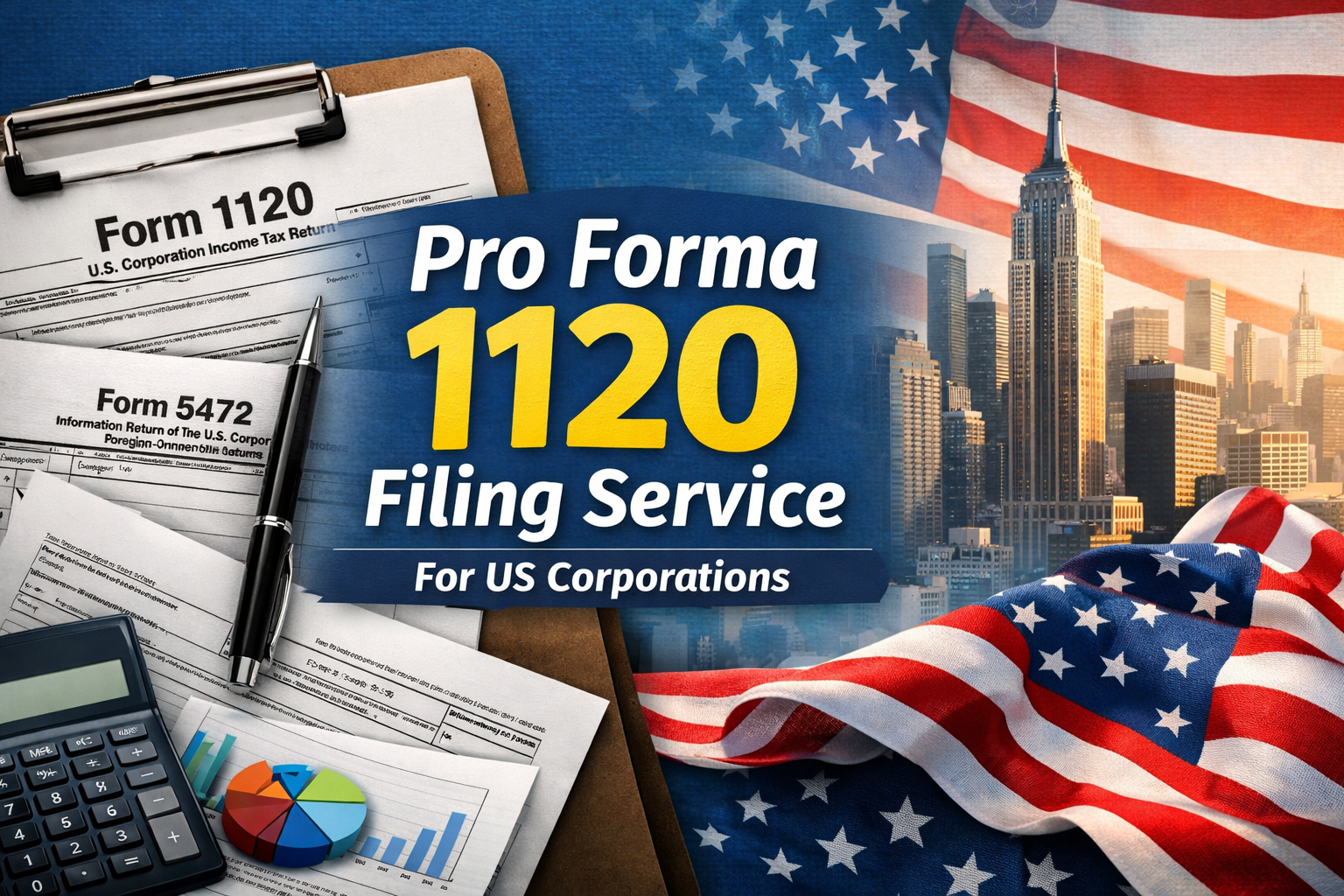

Running a US corporation comes with several tax responsibilities, even if your company has no income or business activity during the year. One of the most misunderstood but critical filings is the Pro Forma 1120. Missing or incorrectly filing this form can lead to IRS penalties and unnecessary compliance issues.
This guide explains what Pro Forma Form 1120 is, who needs to file it, and why using a professional Pro Forma 1120 filing service is the smartest choice for business owners, especially foreign-owned corporations.
- What Is Pro Forma Form 1120?
- Who Needs to File Pro Forma 1120?
- Why Pro Forma 1120 Filing Is Important
- Challenges of Filing Pro Forma 1120 on Your Own
- Benefits of Using a Pro Forma 1120 Filing Service
- What Information Is Required for Pro Forma 1120 Filing?
- Filing Deadline for Pro Forma Form 1120
- Why Choose a Professional Filing Service?
- Frequently Asked Questions (FAQ)
- Conclusion
What Is Pro Forma Form 1120?
Pro Forma Form 1120 is an informational tax return filed by a US corporation that did not conduct business, earn income, or incur expenses during the tax year. Even though there is no tax due, the IRS still requires certain corporations to submit this form to maintain compliance.
Typically, Pro Forma 1120 is filed with:
- Minimal financial information
- A declaration of no business activity
- Mandatory attachments such as Form 5472, when applicable
This filing helps the IRS track corporate ownership and reporting obligations.
Who Needs to File Pro Forma 1120?
Not every corporation needs to file Pro Forma 1120, but it is mandatory in several common situations:
- Foreign-owned US corporations with no operations
- Newly formed corporations that have not started business
- Dormant or inactive US corporations
- Single-owner foreign entities registered in the US
- Corporations required to submit Form 5472
If your company falls into any of these categories, filing Pro Forma 1120 is not optional.
Why Pro Forma 1120 Filing Is Important
Many business owners assume that “no income” means “no filing.” This is a costly mistake. The IRS imposes heavy penalties for non-compliance, even when no tax is due.
Key reasons why Pro Forma 1120 filing matters:
- Avoid IRS penalties that can exceed USD 25,000
- Maintain clean compliance records
- Prevent IRS notices and audits
- Stay eligible for future business activities
- Protect your corporate status in the US
A missed or incorrect filing can create long-term complications for your corporation.
Challenges of Filing Pro Forma 1120 on Your Own
Although Pro Forma 1120 looks simple, it involves technical requirements that are easy to miss. Common mistakes include:
- Incorrect entity classification
- Missing required disclosures
- Improper Form 5472 attachment
- Wrong ownership reporting
- Late filing without extensions
These errors can trigger penalties, even if the form is otherwise complete.
Benefits of Using a Pro Forma 1120 Filing Service
A professional Pro Forma 1120 filing service ensures accuracy, compliance, and peace of mind. Instead of guessing IRS requirements, you get expert handling from start to finish.
Key Benefits
- Accurate preparation based on IRS rules
- Proper attachment of Form 5472 if required
- On-time filing and deadline management
- Reduced risk of IRS penalties
- Support for foreign-owned corporations
- Secure handling of sensitive data
Professional filing is especially valuable for non-US residents unfamiliar with US tax regulations.
What Information Is Required for Pro Forma 1120 Filing?
To prepare Pro Forma Form 1120, the following details are usually required:
- Corporation legal name and EIN
- Date of incorporation
- Ownership details
- Confirmation of no income or expenses
- Related-party transaction details, if any
A filing service reviews this information carefully to ensure full compliance.
Filing Deadline for Pro Forma Form 1120
The standard deadline to file Pro Forma Form 1120 is:
- April 15 for calendar-year corporations
If more time is needed, an extension can be filed, but the form must still be completed correctly. Late filing can result in penalties even when no tax is due.
Why Choose a Professional Filing Service?
Using a dedicated Pro Forma 1120 filing service saves time, avoids costly errors, and ensures IRS compliance. It allows business owners to focus on growth instead of worrying about technical tax filings.
Professional services are especially recommended for:
- Foreign-owned US corporations
- First-time filers
- Inactive or dormant companies
- Businesses with Form 5472 requirements
Frequently Asked Questions (FAQ)
What is Pro Forma 1120?
Pro Forma 1120 is an informational tax return filed by US corporations that had no business activity during the tax year.
Is Pro Forma 1120 mandatory?
Yes, it is mandatory for certain corporations, especially foreign-owned entities, even if there is no income.
What happens if Pro Forma 1120 is not filed?
Failure to file can result in IRS penalties, notices, and compliance issues, even when no tax is due.
Does Pro Forma 1120 include Form 5472?
Yes, if the corporation has foreign ownership or reportable transactions, Form 5472 must be attached.
Can I file Pro Forma 1120 myself?
You can, but errors are common. A professional filing service reduces risk and ensures full compliance.
Conclusion
Pro Forma 1120 filing is a critical compliance requirement for many US corporations, especially those with foreign ownership or no business activity. Even though no tax is payable, the IRS expects accurate and timely reporting.
Using a professional Pro Forma 1120 filing service ensures your corporation stays compliant, avoids penalties, and maintains a clean IRS record. If your company qualifies for Pro Forma 1120, filing it correctly and on time should be a top priority.
Permalink